Kody Odigo
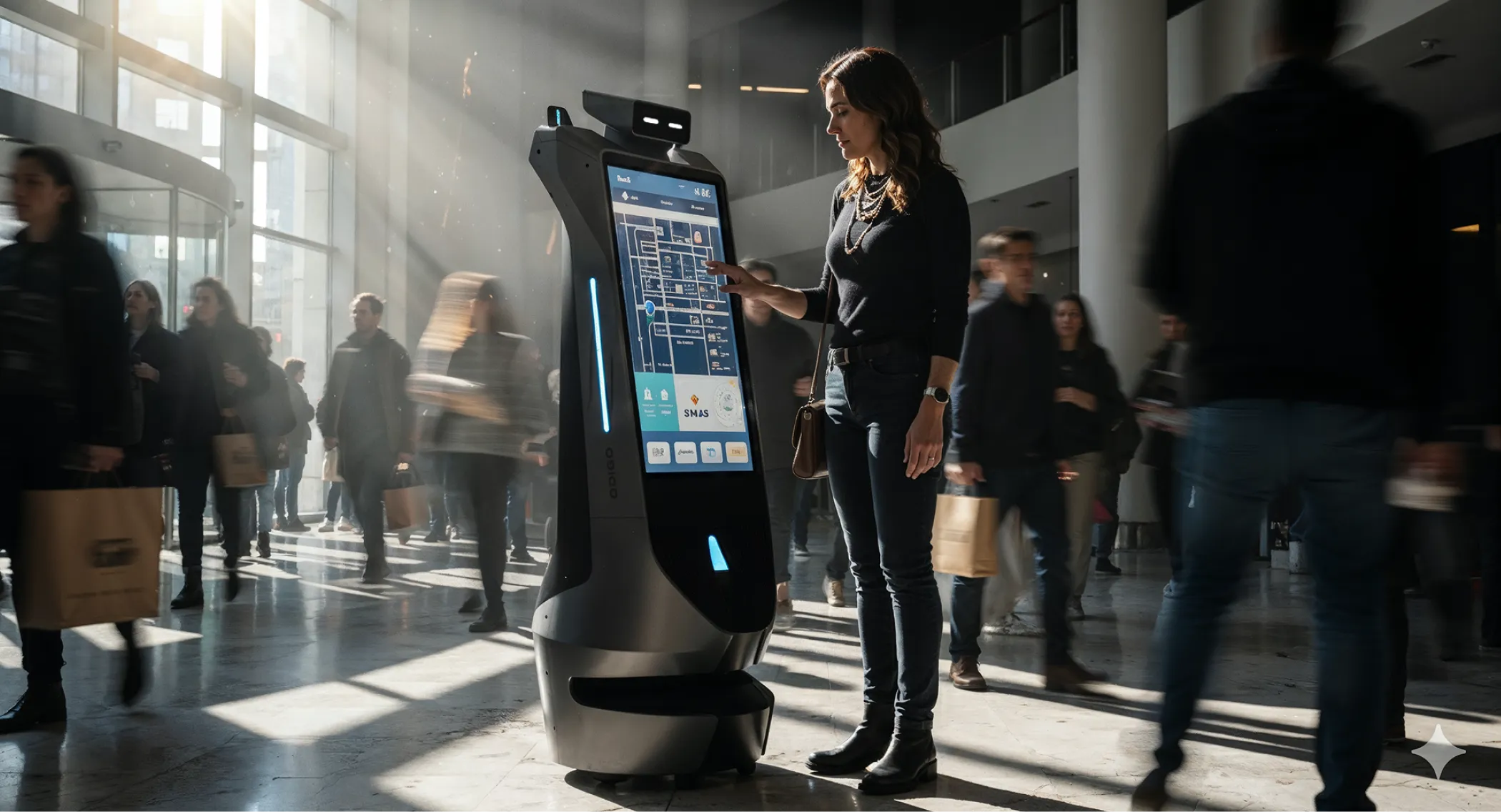
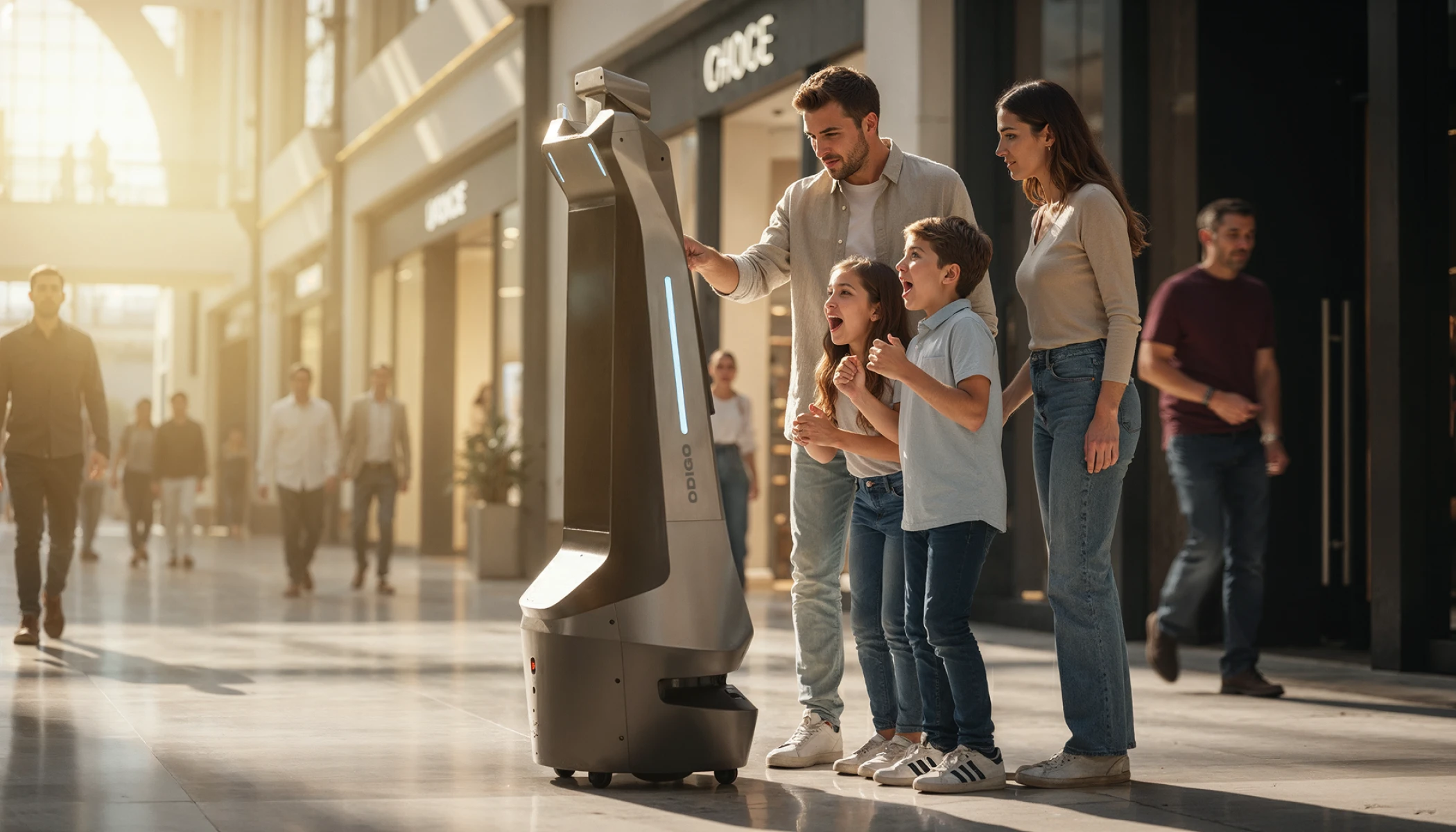
A robot rolls up in a mall, and in the space of a second, a stranger decides whether to trust it or walk the other way. Kody Robots, an autonomous robotics company deploying machines into malls, airports, and retail spaces worldwide, brought us a specific problem: public spaces punish anything that looks clinical or unsettling within seconds. They came to us in 2024, wanting an advertising and navigation robot that could hold its own in that environment, approachable rather than alarming. Odigo is what came out of that.
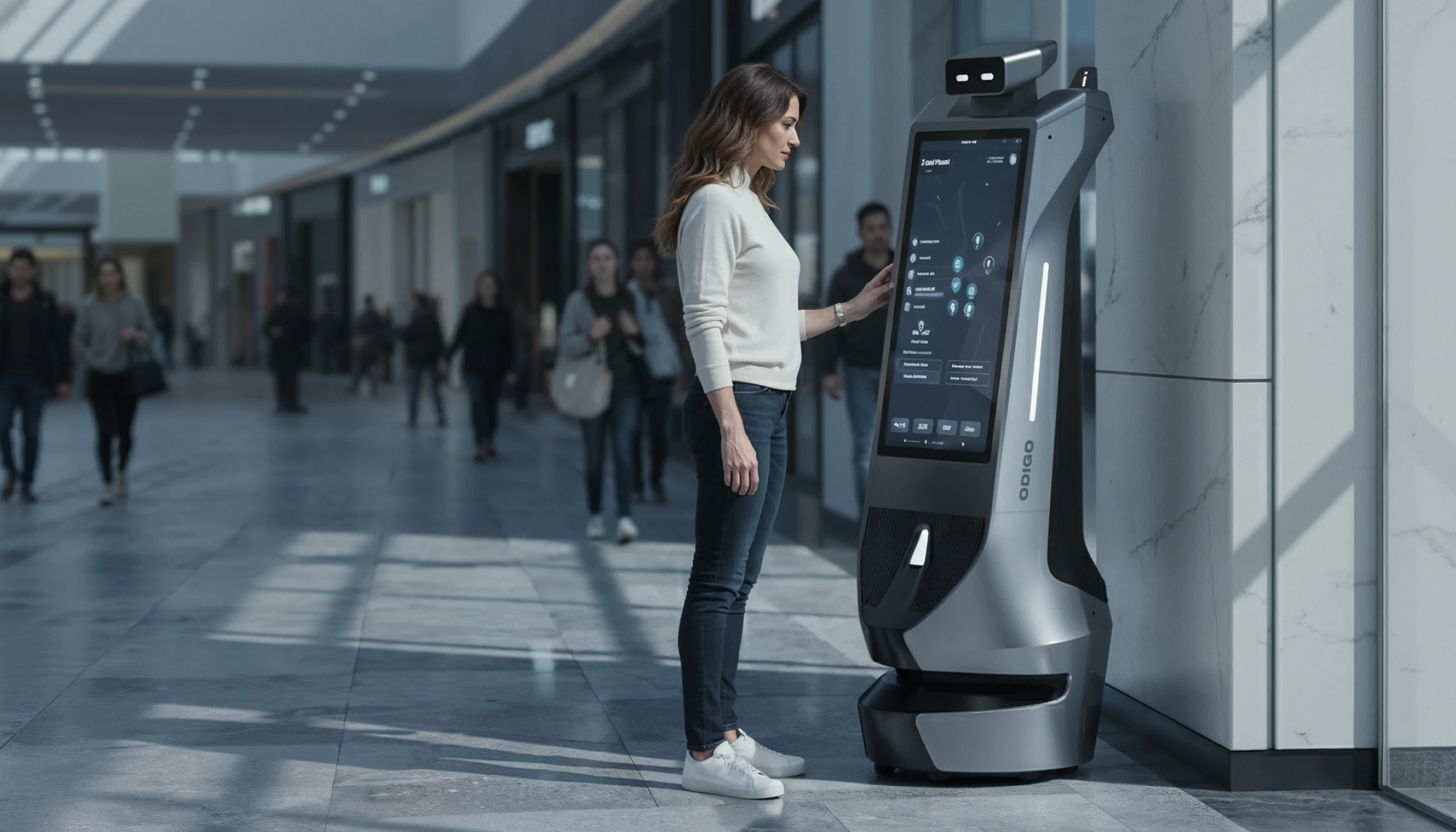
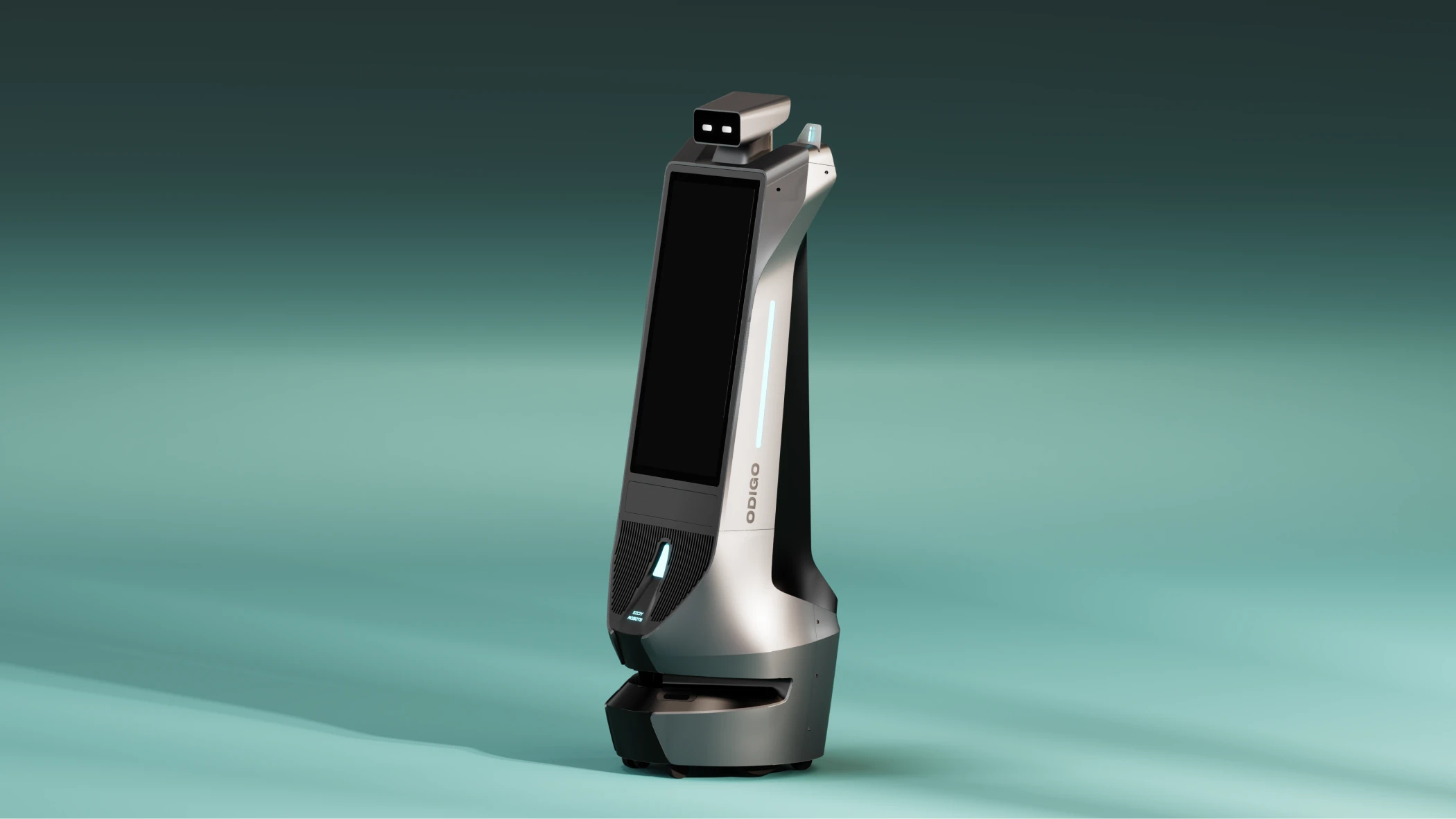
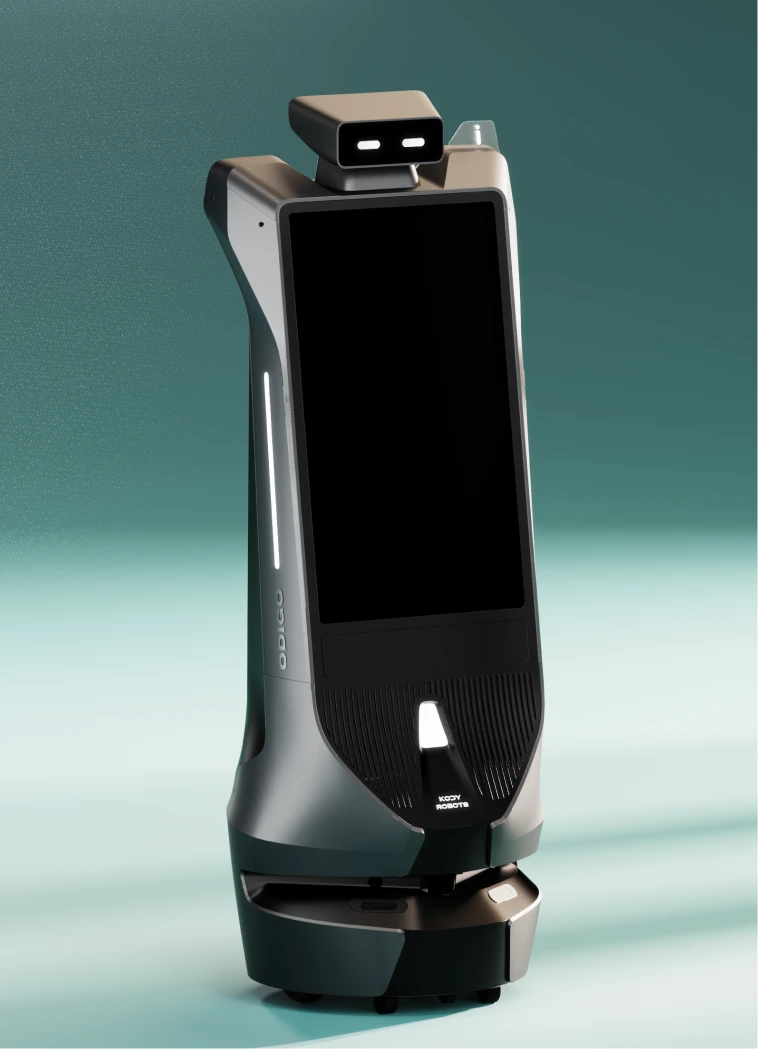
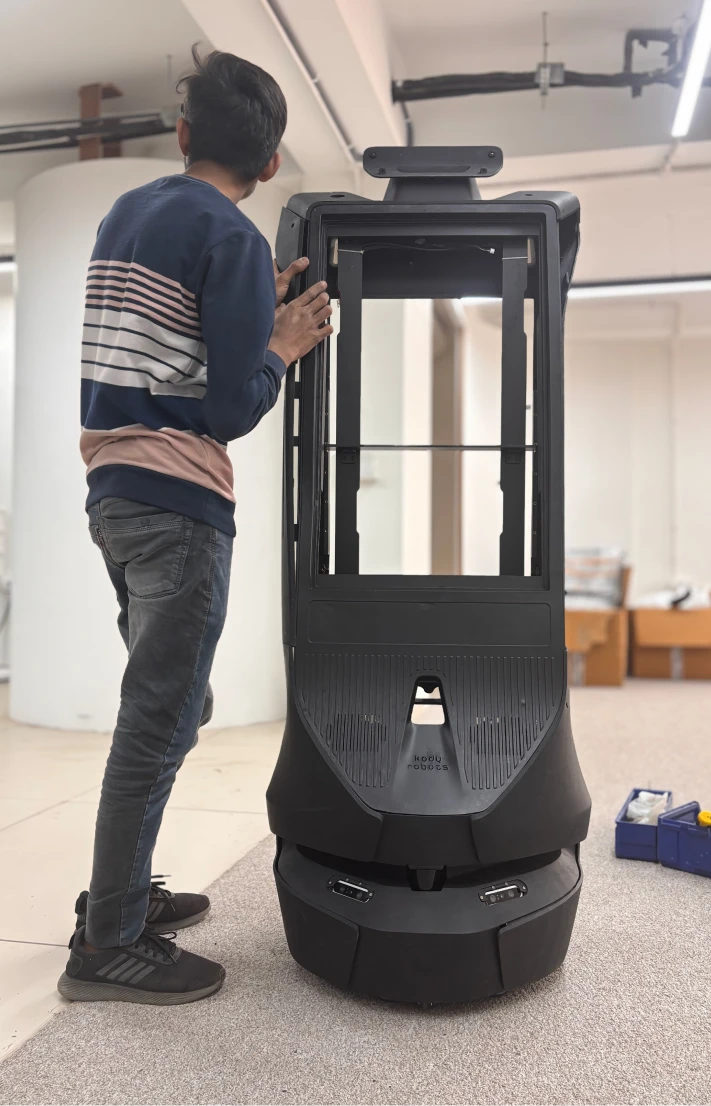
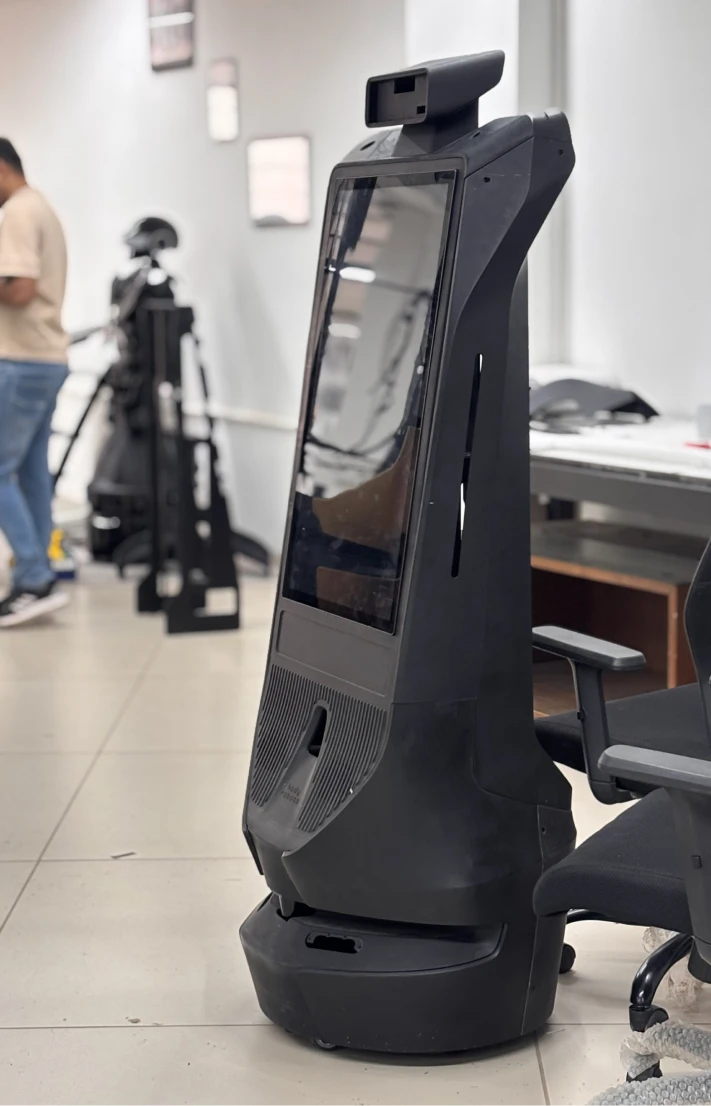
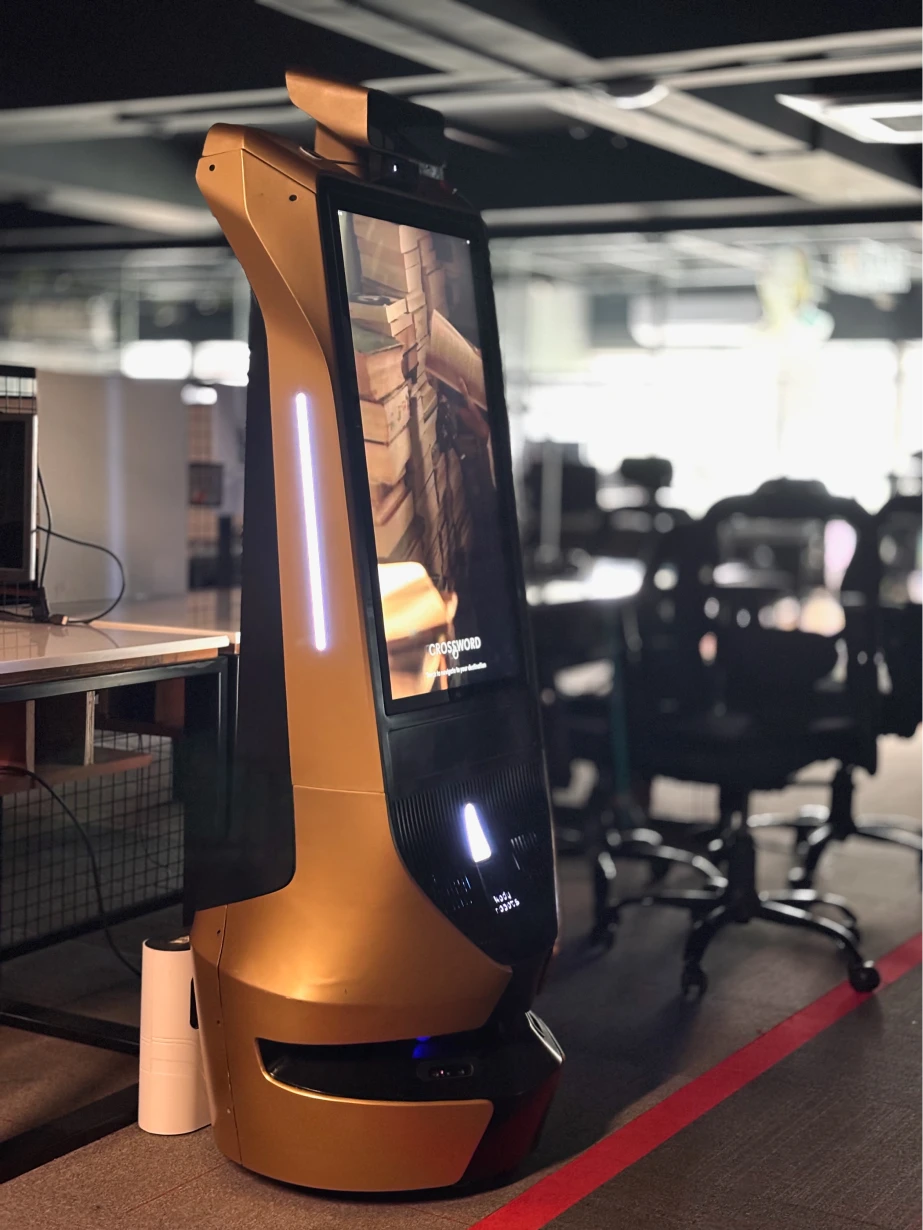
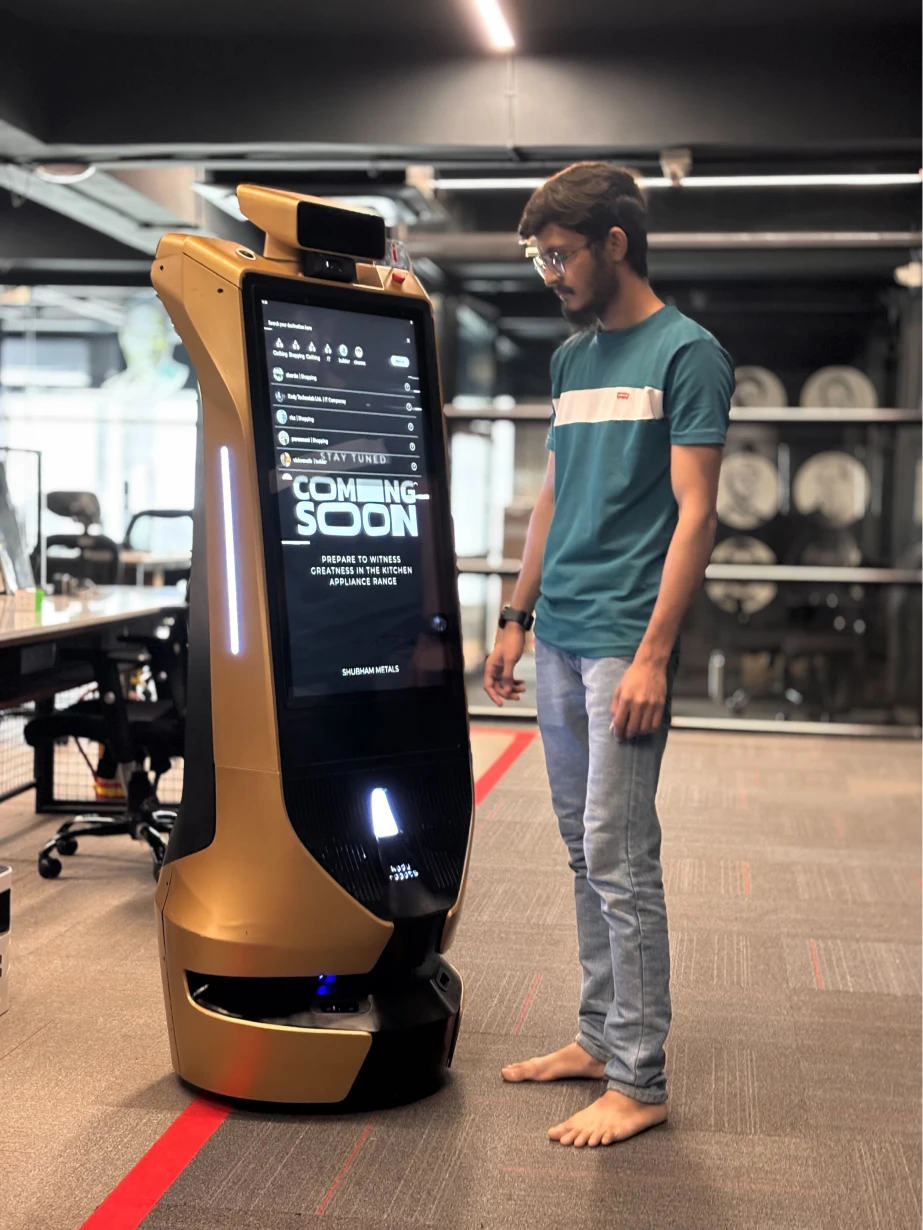
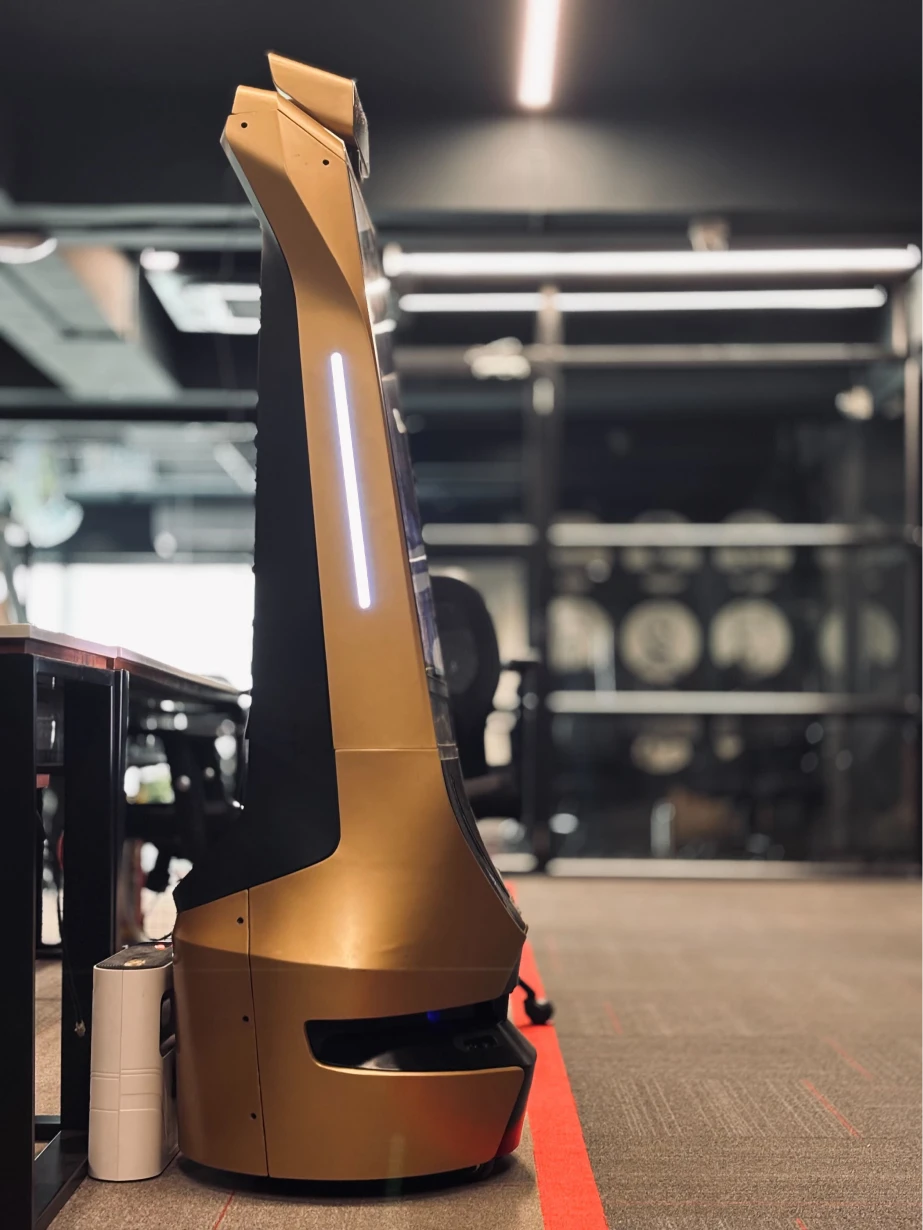
We didn't try to make Odigo look human, that tends to unsettle people more than it reassures them. Instead we leaned on something people already read without thinking, a tall, upright shape with clear zones stacked one on top of the other. A face area up top holds the expression screen and camera, giving people something to look at right away. A tall middle section carries the main display, the part actually doing the talking. The base holds all the sensors, tucked low and positioned to get as much of the room as possible. Nobody has to be told where to look, the shape does that on its own.
We handled the whole project end to end, styling, internal structure, engineering, and how it would actually get manufactured. That mattered here specifically because Odigo's slim look and internal architecture couldn't be designed separately.
Two Screens, One Spine
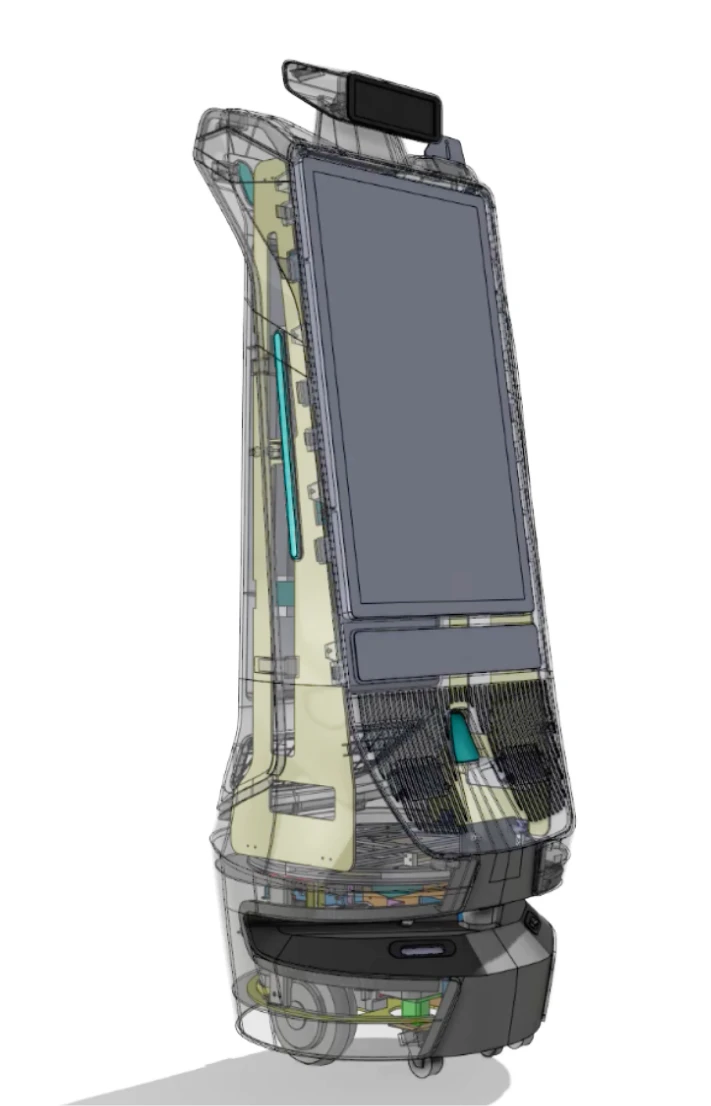
Odigo runs two screens, one for expression, one for the main display, and the risk with that is always looking bulky or stitched together. We solved it with a compact internal spine that holds both screens firmly in place while routing all the wiring, batteries, and speakers through it efficiently. The spine carries the strength, so the outer shell doesn't have to, which is what keeps Odigo slim despite everything packed inside.
Shaped to See
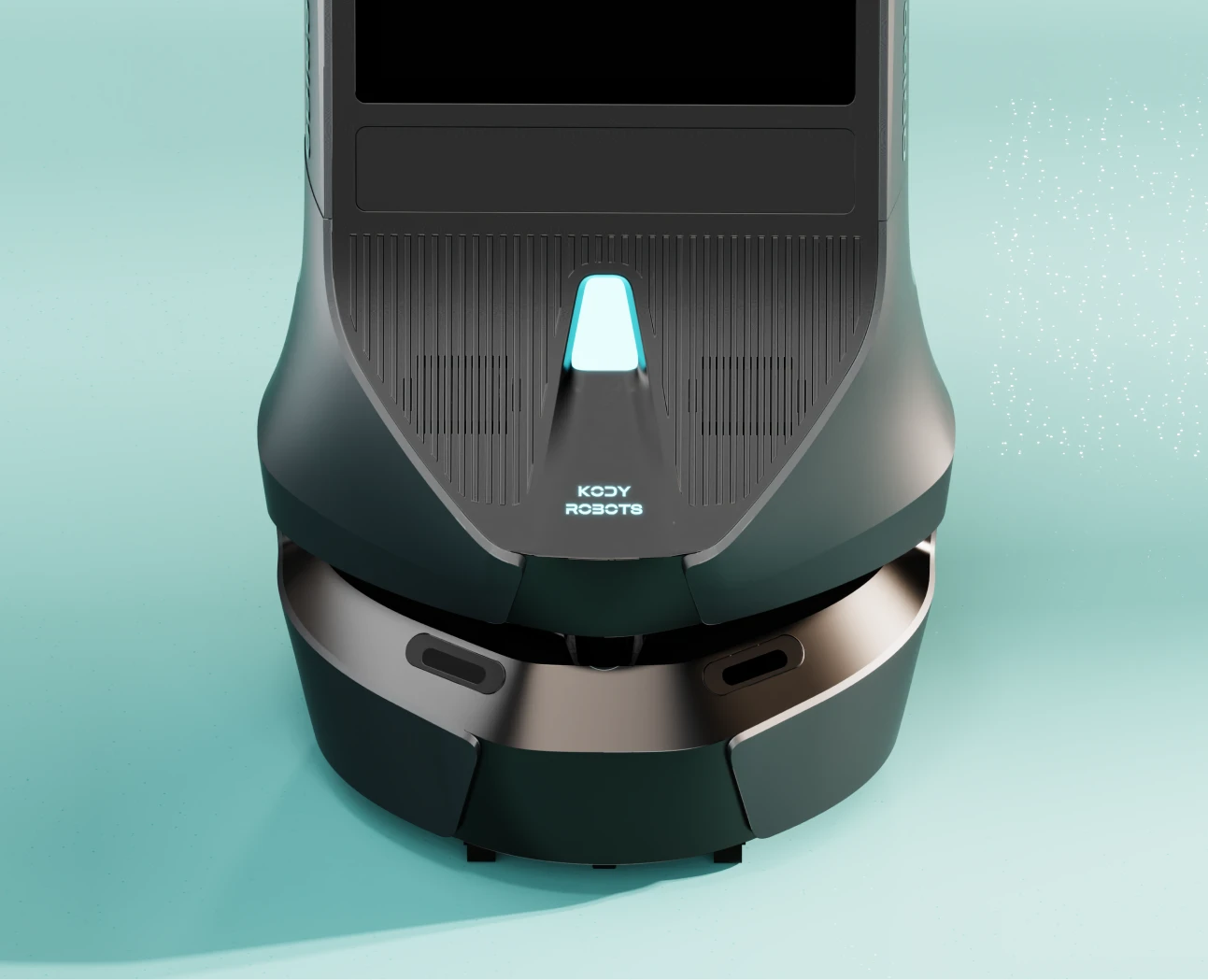
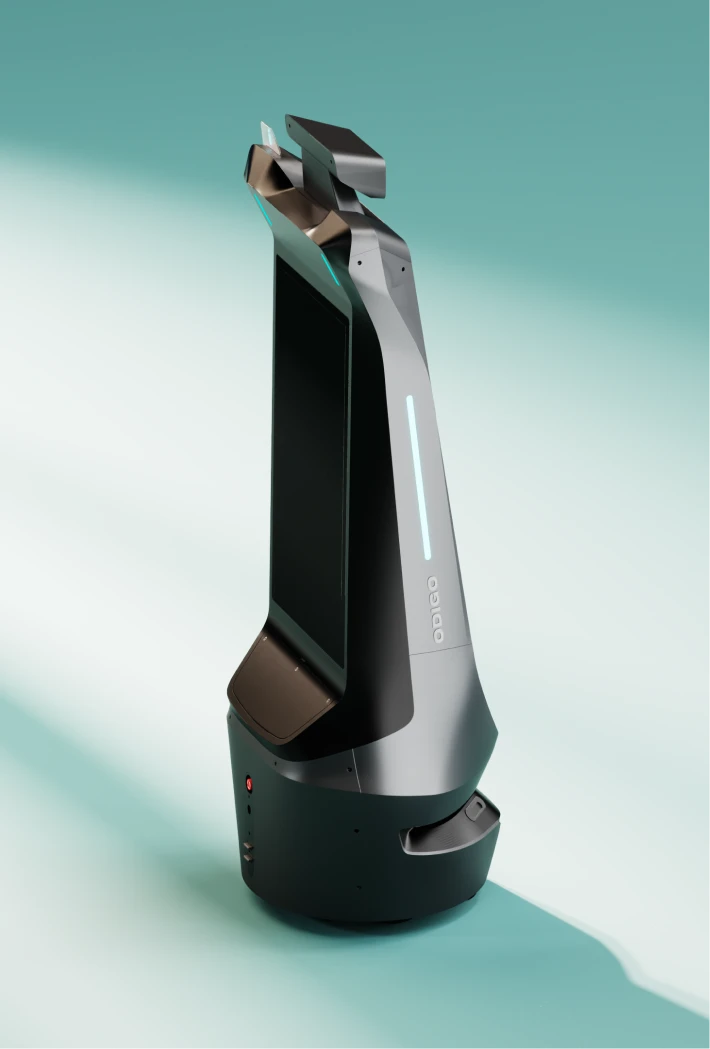
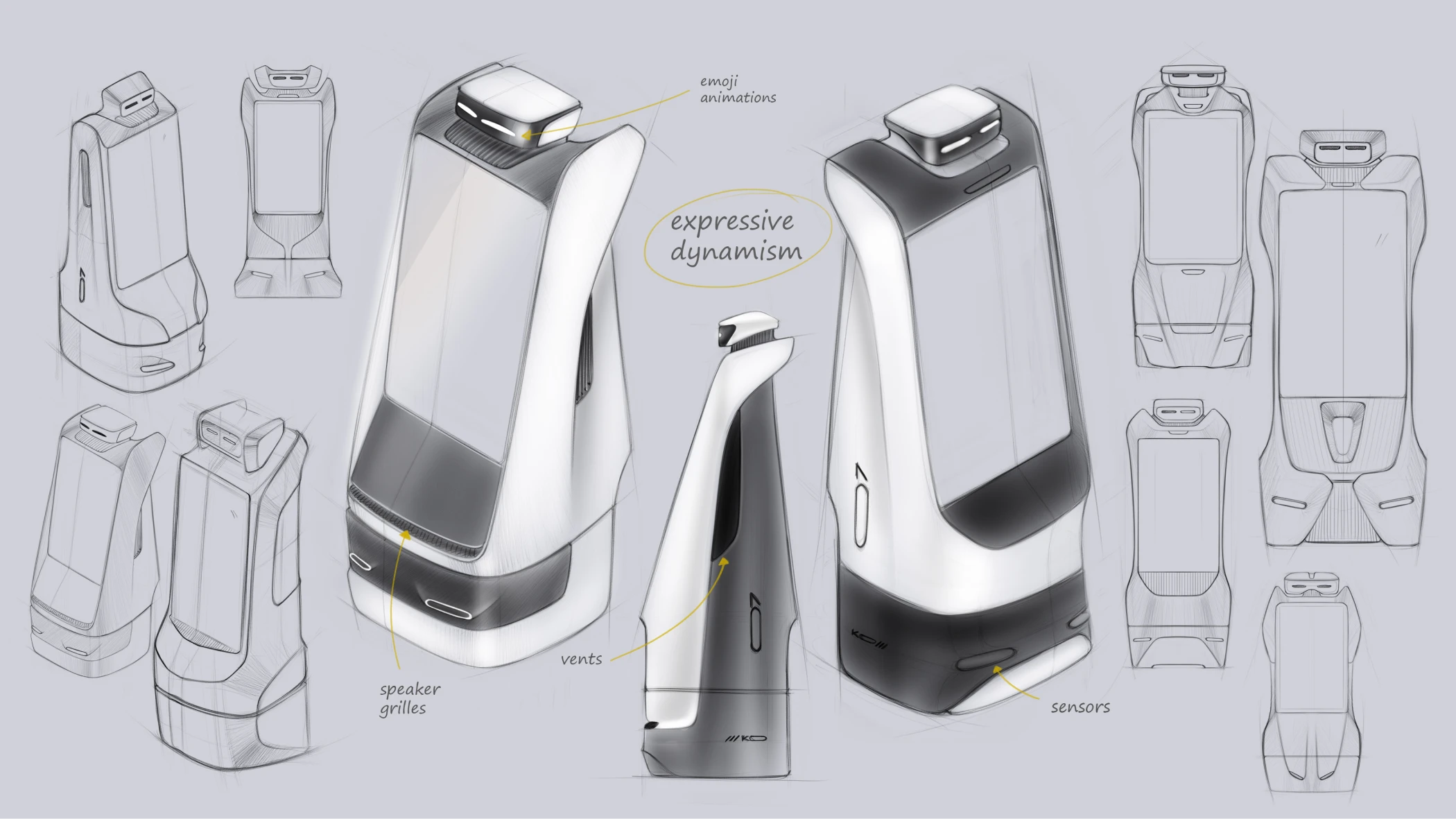
Odigo's navigation intelligence lives in the base, and every sensor there needs a clear line of sight to work properly. That need shaped the geometry directly, curved and angled surfaces that keep nothing blocking the sensors' view, plus vertical light strips that double as visual cues and as clean seams for manufacturing.
Manufacturing First
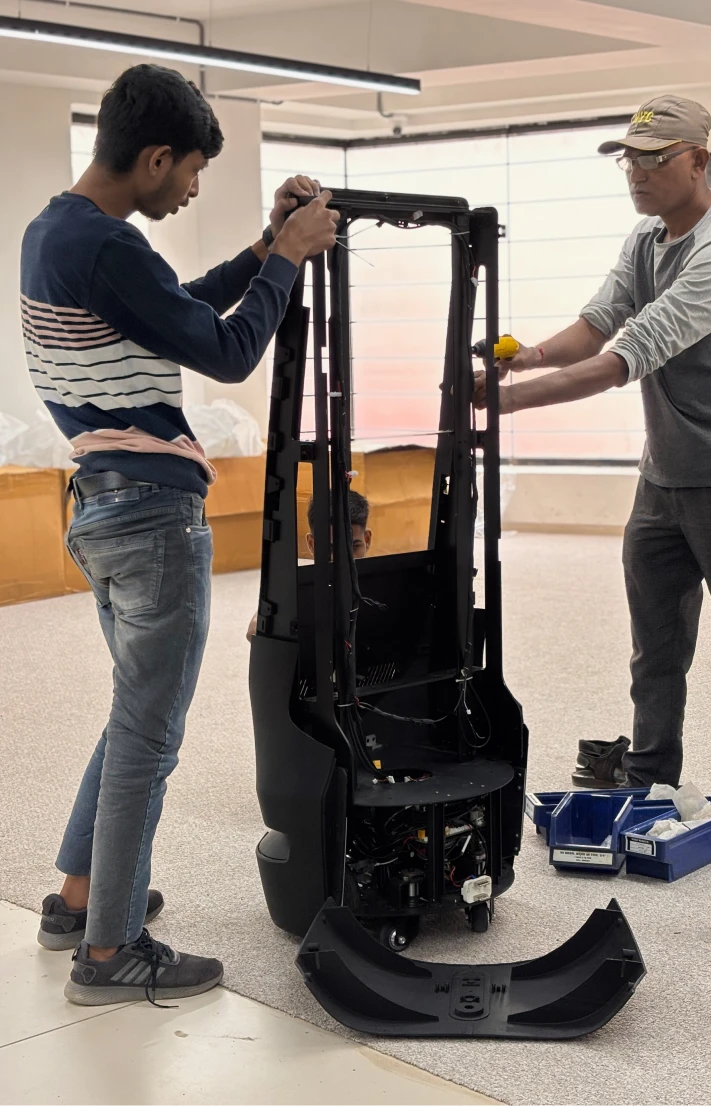
Odigo was shaped for mass production from the very first sketch, not adjusted for it afterward. Every visible line on the surface matches exactly where the physical parts split apart during assembly. Several pieces do double duty, cutting down on the total part count without adding complexity. The inside stays easy to open up for repairs too. The form language was designed to look seamless and approachable.
Impact
Since our project, Odigo has moved from prototype to large-scale commercial deployment across the Middle East and India. In November 2025, Kody Technolab's UAE joint venture Falcon Tech Robotics signed a deal with LuLu Group International to deploy 290 Odigo robots across 60 locations, and weeks later, Falcon Tech agreed to deploy a further 360 units across Hypermedia's network of 30 malls and the Dubai Expo site, taking total Odigo orders past 600 units in the UAE alone by November 2025. Odigo has also become a fixture at high-profile venues and events, with clients specifically noting the robot "blended seamlessly into the mall environment", exactly the approachable, non-clinical read the design was built around.
Yash Bam
Industrial Designer
Meet Ramani
Design Engineer
Christopher Richard
Industrial Designer
Sanjay Kidecha
CEO